
A Planet Before Humans
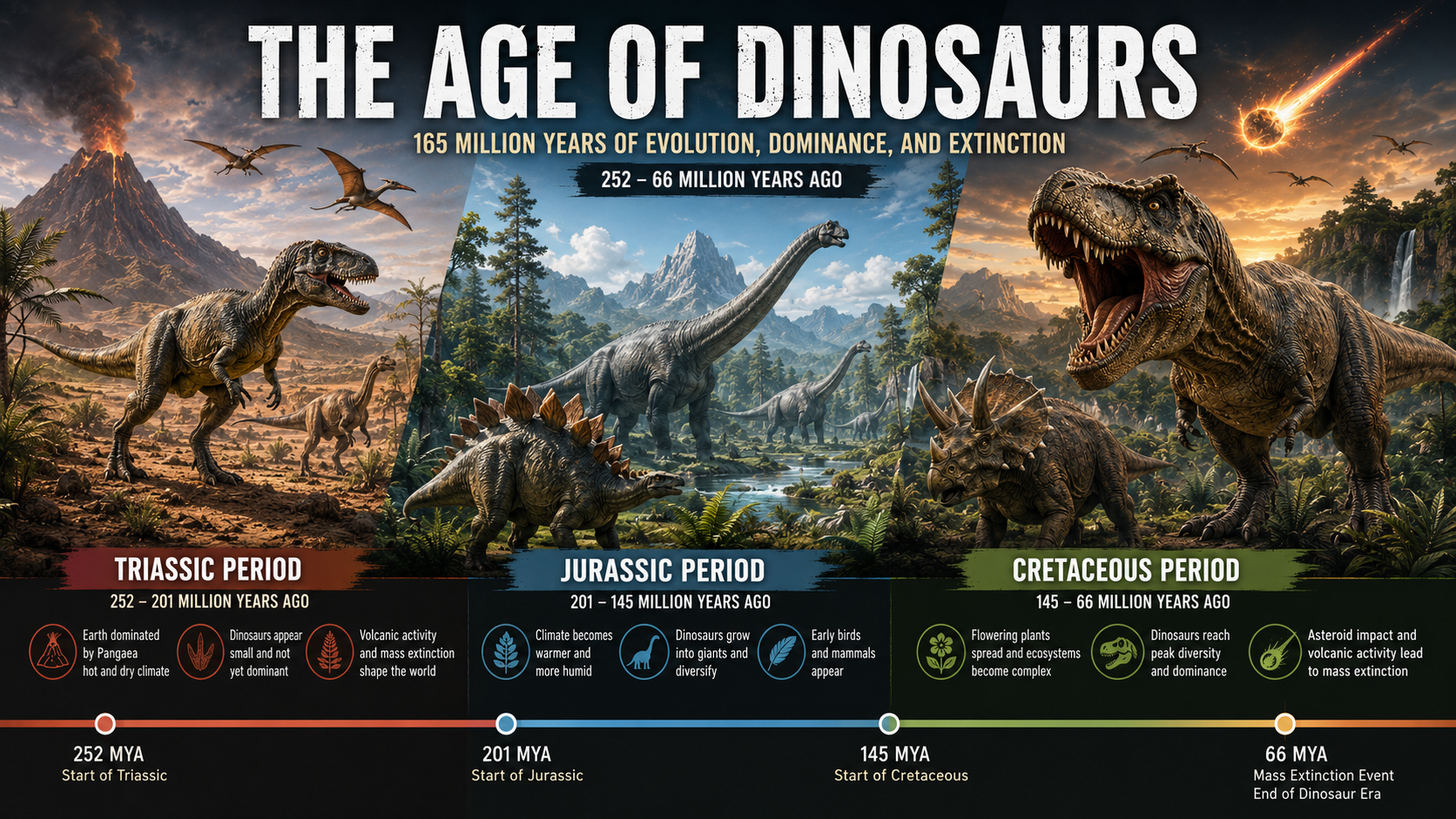
Long before humans appeared on Earth, dinosaurs dominated the planet for more than 165 million years during an immense span of geological history known as the Mesozoikum. This period began around 252 million years ago and ended approximately 66 million years ago after one of the most catastrophic extinction events ever recorded. Compared to the relatively short existence of modern humans, the reign of dinosaurs was unimaginably long and filled with dramatic environmental changes, evolutionary breakthroughs, and mass extinctions.
The world during the dinosaur era looked nothing like modern Earth. Continents were arranged differently, climates were warmer, and giant reptiles ruled the land, oceans, and skies. Scientists divide the dinosaur age into three major geological periods known as the Trias, Jura, and Kapur periods. Each of these eras had unique ecosystems and species that evolved over millions of years.
Read also : Why the Sky Appears Blue
The Harsh World of the Triassic
The Triassic Period marked the beginning of the dinosaur age shortly after the devastating Permian extinction event, which wiped out the majority of life on Earth. During this time, the planet was dominated by a massive supercontinent called Pangaea. Because most land was connected, the climate across large areas became extremely hot and dry, creating harsh conditions for many forms of life.
The earliest dinosaurs were relatively small compared to the giant species that appeared later. They walked on two legs, moved quickly, and competed with many other reptiles that also tried to dominate the environment. Early dinosaurs such as Coelophysis were lightweight predators that hunted smaller animals across dry landscapes filled with volcanic activity and sparse vegetation.
Scientists believe dinosaurs succeeded because they adapted efficiently to changing climates and ecological pressures. Their upright posture allowed better movement and energy efficiency than many competing reptiles. Over millions of years, this advantage helped them spread across the planet and diversify into numerous species.
The Rise of Giants in the Jurassic
During the Jurassic Period, Earth transformed into a greener and more humid world. Forests expanded across many regions, providing enormous amounts of food for herbivorous dinosaurs. This environmental shift allowed some dinosaurs to evolve into gigantic creatures unlike anything seen on Earth today.
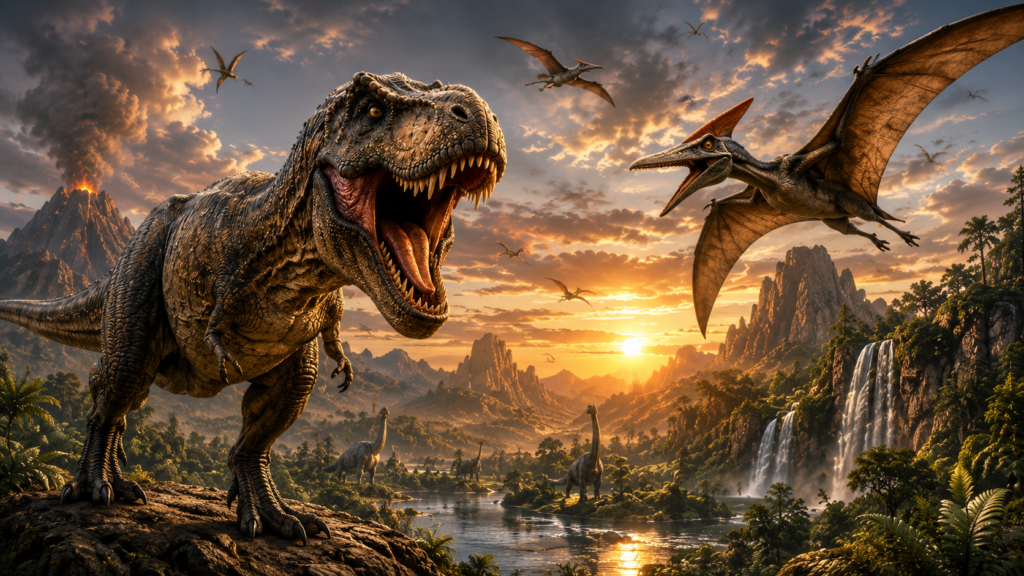
Massive sauropods such as Brachiosaurus and Diplodocus became some of the largest animals ever to walk on land. Their extremely long necks allowed them to reach vegetation high above the ground, while their enormous bodies protected them from most predators. At the same time, carnivorous dinosaurs evolved into highly efficient hunters capable of taking down large prey.
The Jurassic world was also important because it saw the appearance of the earliest birds. Many scientists now believe modern birds evolved directly from small feathered dinosaurs. Fossil discoveries from different parts of the world show evidence of feathers, bird-like skeletons, and advanced behaviors in several dinosaur groups.
The oceans during this era were filled with giant marine reptiles, while flying reptiles known as pterosaurs dominated the skies. Although these creatures are often associated with dinosaurs in popular culture, they belonged to different reptile groups that evolved alongside them.
The Complex Ecosystems of the Cretaceous
The Cretaceous Period was the final and most diverse stage of the dinosaur era. During this time, flowering plants began spreading rapidly across Earth, transforming ecosystems and influencing the evolution of insects and herbivorous animals. Continents also started separating into forms that resemble modern geography, creating isolated habitats where unique species evolved independently.
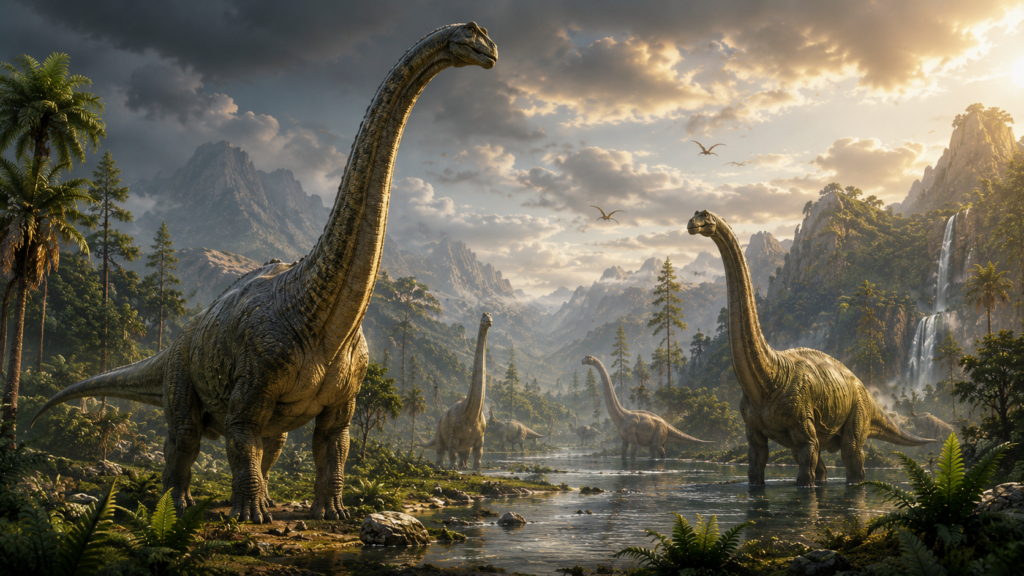
Some of the most famous dinosaurs lived during this period, including Tyrannosaurus rex, Triceratops, Spinosaurus, and Velociraptor. These animals occupied highly specialized ecological roles within complex food chains. Predators evolved sharper senses and stronger jaws, while herbivores developed horns, armor, and defensive behaviors to survive.
Scientific studies suggest some dinosaurs may have lived in social groups, cared for their young, and communicated using sounds or visual displays. Fossilized nesting grounds and preserved footprints provide clues about herd movement and parental behavior. These discoveries continue to challenge the outdated image of dinosaurs as slow and unintelligent reptiles.
The climate during the Cretaceous remained relatively warm, and sea levels were much higher than today. Large shallow seas covered parts of continents, creating rich marine ecosystems filled with ammonites, giant reptiles, and early fish species related to modern marine life.
Read also : What Happens If the Moon Disappears
The Catastrophic Extinction
Around 66 million years ago, the age of dinosaurs came to a sudden end during the event known as the Kepunahan massal Kapur–Paleogen. Most scientists agree that a massive asteroid impact near present-day Mexico caused enormous environmental destruction across the globe.
The impact created the Chicxulub crater and released energy equivalent to billions of nuclear bombs. Dust and debris entered the atmosphere, blocking sunlight and disrupting global temperatures for extended periods. Plants died from lack of sunlight, food chains collapsed, and many species disappeared forever.
Volcanic eruptions occurring around the same time may have worsened climate instability by releasing huge amounts of gases into the atmosphere. Together, these disasters triggered one of the largest extinction events in Earth’s history, eliminating nearly all non-avian dinosaurs along with many marine organisms.
Despite this devastation, some species survived. Small mammals adapted to changing conditions and eventually expanded into ecological roles once dominated by dinosaurs. Birds, which evolved from feathered dinosaur ancestors, also survived and continue representing the last living branch of the dinosaur lineage today.


One thought on “The Age of Dinosaurs – Earth Before Human”